
Spirituality in the Digital Age: Finding Sacred Space in a Scrolling World
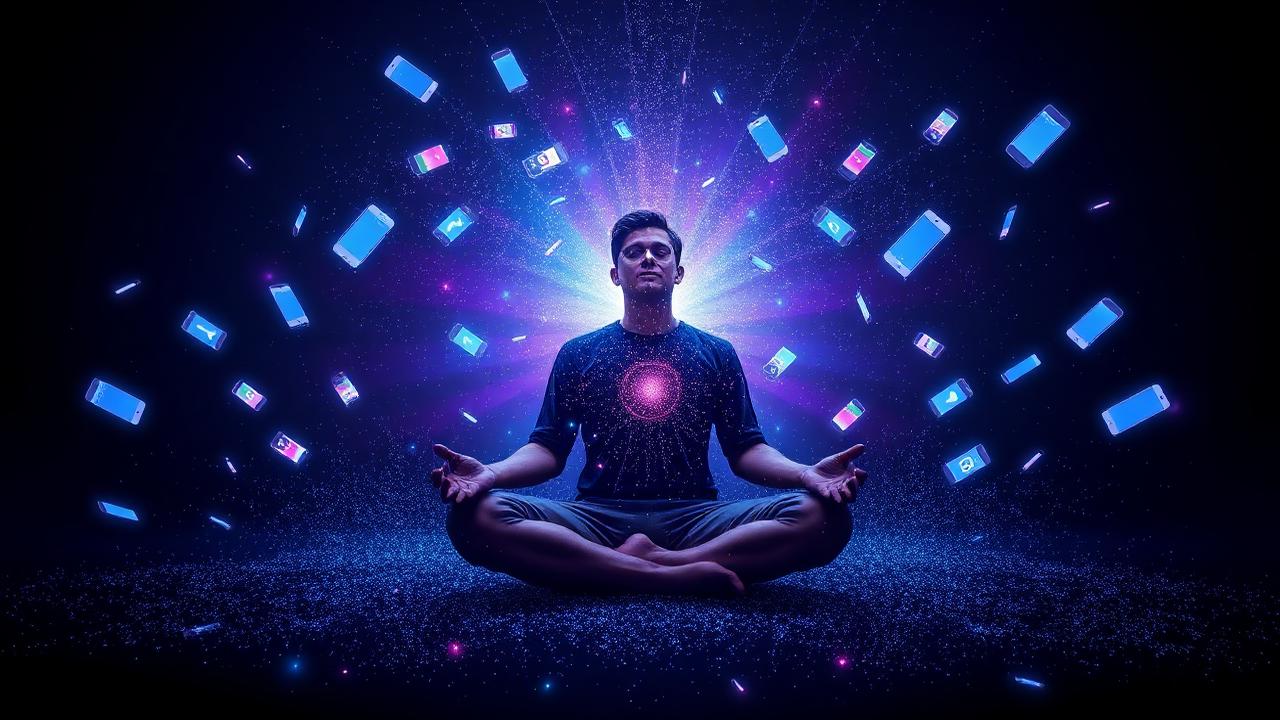
You've probably had this experience: you sit down to meditate, and thirty seconds in, your hand involuntarily reaches for your phone. Not because you need it. But because your nervous system has been hijacked by algorithms designed by the smartest engineers on the planet to keep you scrolling.
We're living in an unprecedented experiment — billions of human nervous systems plugged into a machine that profits from our distraction. And yet, spiritual practice has never been more needed. So how do we find depth in an age of infinite shallow?
The Attention Economy vs. Your Soul
Every app on your phone is competing for one thing: your attention. And attention is the currency of spiritual practice. You cannot meditate, pray, journal, or self-reflect while simultaneously consuming content. They are fundamentally incompatible activities.
The attention economy doesn't want you present. It wants you reactive, emotional, and perpetually seeking the next hit of novelty. This is the exact opposite of what spiritual growth requires: patience, stillness, and the willingness to sit with uncomfortable silence.
Digital Minimalism as Spiritual Practice
What if your relationship with technology was itself a spiritual practice? Not rejecting it entirely — that's not realistic. But becoming fiercely intentional about how, when, and why you engage with it.
Morning sovereignty. The first hour of your day shapes everything. Instead of checking your phone, start with breathwork, journaling, or meditation. Protect that container fiercely.
Curate ruthlessly. Unfollow accounts that trigger comparison, anxiety, or FOMO. Follow voices that challenge you to grow. Your feed is your environment — design it intentionally.
Create more than you consume. Consumption is passive. Creation is active. Shift the ratio and watch your inner life transform.
Using Technology as a Sacred Tool
Technology isn't inherently anti-spiritual. Guided meditation apps have introduced millions to stillness. Online communities have connected seekers across the globe. Podcasts have made deep conversations accessible to anyone with earbuds.
The question isn't whether to use technology — it's whether you're using it, or it's using you. Can you pick up your phone with intention and put it down when you're done? If not, that's valuable data about your nervous system's relationship to stimulation.
Building a Practice That Survives the Scroll
Anchor practices. Non-negotiable daily rituals that root you in the present moment. Five minutes of meditation. A gratitude practice. A walk without your phone. Small, consistent anchors outperform occasional deep dives.
Tech sabbaths. One day a week — or even one afternoon — where you're fully offline. Notice the withdrawal. Notice the boredom. And then notice what emerges when your mind finally stops consuming: creativity, insight, peace.
Embodiment over information. Stop collecting spiritual concepts and start living them. You don't need another book, course, or guru. You need to practice being real in one conversation today. That's the practice.
This is a topic I explore regularly in panel discussions — the intersection of consciousness and the digital world. The conversation is urgent, and the answers are simpler than we think.
Reclaim Your Inner Life
Coaching helps you build a spiritual practice that's resilient, grounded, and immune to the noise of the digital world.
Book a Discovery CallKeep Reading

What Is Spiritual Coaching? A Practical Guide to the Deep Work
Your life looks fine on paper and feels hollow in practice. Here's what spiritual coaching actually is, how it differs from therapy, and how to know you're ready.

The Art of Radical Authenticity: Why Being Real Is Your Superpower
We live in a world that rewards performance. But the mask that protects you is the same mask that isolates you. Here's why being real is the most magnetic thing you can do.
5 Signs You're Going Through a Spiritual Awakening
That existential crisis you're having? It might actually be your soul leveling up. Here's how to tell the difference.